



An imperial-royal first aid rescue kit in Austria’s high mountain warfare 1914–1918: antisepsis, antivenin, and water hygiene
Christian J. Wiedermann · Patrick Rina · Hannes Obermair
Wien Med Wochenschr (2026) 176:27–37,https://doi.org/10.1007/s10354-025-01124-5
Accessed: This paper is available via Google Scholar
Have you bought an off-the-shelf first aid kit or made your own?
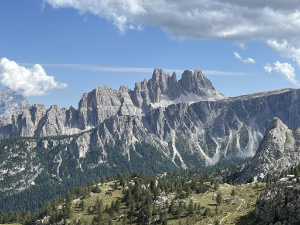
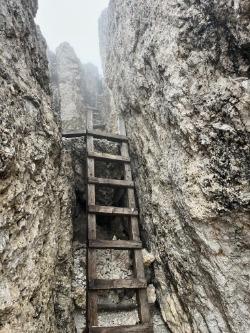
I just returned from a trip to Italy, where I climbed some Via Ferratas and learned about the area's military history.
.  .
. 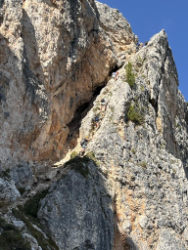
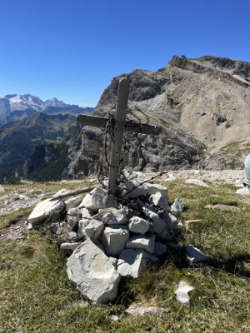
The area around Cortina was part of the World War One Alpine Front, which saw fierce fighting in extreme mountain conditions. The hillsides still have many trenches and abandoned wood and metal relics of the period. It is estimated that there were 150,000 deaths in this campaign. 100,00 were caused by avalanches, hypothermia, frostbite, and the environment. It is thought-provoking to consider the hardship the troops endured in these mountains when today we visit to enjoy the fun of climbing on cables.
 .
. 
When I returned home, I found this paper, which examines the contents of a military first aid kit from this area and period. The paper describes the kit's origin and contents, and then discusses the findings in the context of medical and social history.
But what did I learn that is worth sharing in this blog?
We know that providing first aid is an essential part of our preparation for adventure. But initial care of the injured or sick has only recently become part of our social structure. The paper explains that the development of first aid has origins in the conflicts in the late 19th century and the associated advances in physiology and medicine. The St John's Ambulance was established in 1877, and some of the earliest ready-made first-aid kits were issued to railway workers in the US in 1888. First aid was used in military operations with the introduction of the Geneva Convention and the Red Cross in 1864.
During the First World War, first aid kits were designed to manage bleeding and fractures until more definitive care could be delivered. Providing first aid kits at the point of need is therefore not new.
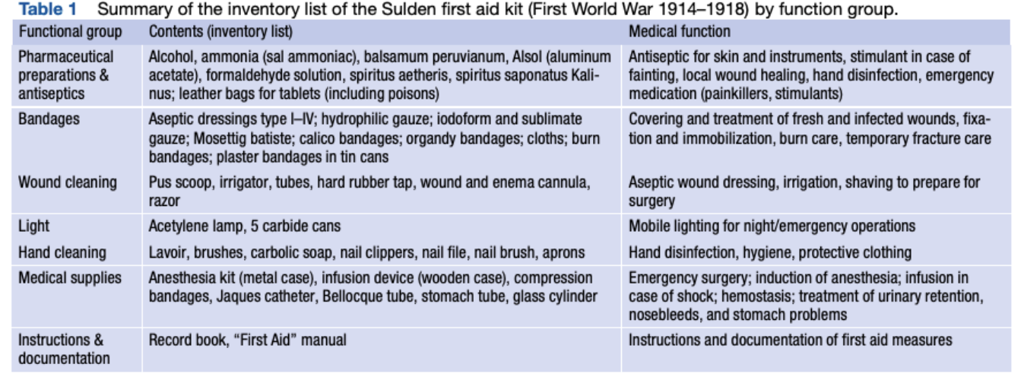
The kit in the paper was allocated to a hotel in the town of Sulden. The historical records show that several army doctors used this building. The content differs from the inventories of similar kits issued at the time. This is explained as an adaptation to local requirements: scarcity of resources and the need to cope with the challenges of delayed evacuation from this remote location.
We should also consider the situations in which we use our own first aid kits: the local risks, which conditions are common in this environment, what resources are available, and how long it will take for the patient to reach definitive care.
The paper describes an analysis of the structure and contents of the first aid kit. The box contains an inventory and is organised systematically into modular sections with standardised packing. There is a focus on its use by non-medical personnel.
These remain excellent principles for designing our kits today.
For example, the bandages were contained in sterile packing (a relatively new concept) and organised according to their use for
bleeding control, strapping fractures and burns. We would recognise this today in having trauma dressings, haemostatic dressings,
cohesive bandages, etc. These supplies addressed the common problems they would need to treat injuries on the battlefield. We should also make a plan based on the environment in which we are operating.
They included acetylene lamps, recognising the problem of carrying out care in poor light at night or in tunnels and trenches. We should also consider how to create a suitable working environment in the mountains; our head torches and emergency shelters are essential parts of our first aid kits.
In the historical kit, there was a First Aid Manual and logbook. We might choose crib cards or checklists to help us make decisions in stressful and unfamiliar situations, but the principles remain the same. What do you carry to record your findings and actions?
The inclusion of a method for water sterilisation reflects an understanding that the prevention of infection required cleaner water than was available during warfare. They used a chlorine-based method and provided a solution to neutralise the taste, similar to products currently on the market in outdoor shops. This shows that first aid was considered important to interrupting the chain of events that cause infection in traumatic wounds.
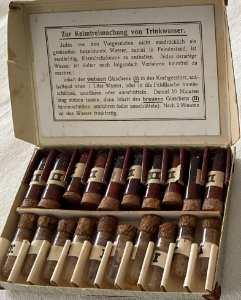
Buying a First Aid Kit off the shelf is one approach, but following design principles based on a needs assessment, illustrated by this paper, is also a sound way to proceed.
The Alpine Front was the scene of terrible hardship and fighting. The wooden crosses and barbed wire humbled me and were a reminder that mountains have not always been a place of beauty and peace.

Comments
Leave a comment.

 )
) Bronze
 Silver
 Gold
Gold Platinum
 Palladium
 Internal