


Paper of the Month
Hypothermia
Posted by Mike Greene on Feb 24, 2026

Welcome to the first edition of "Paper of the Month"
The Management of Hypothermic Patients
Clinical staging of accidental hypothermia: the Revised Swiss System: recommendation of the International Commission for Mountain Emergency Medicine (ICAR MedCom).
Musi ME, Sheets A, Zafren K, Brugger H, Paal P, Hölzl N, Pasquier M. Clinical staging of accidental hypothermia: the revised Swiss System: recommendation of the International Commission for Mountain Emergency Medicine (ICAR MedCom). Resuscitation. 2021 May 1;162:182-7. Available at: https://www.sciencedirect.com/science/article/pii/S0300957221000964
The recent cold weather has brought some wonderful winter conditions to the mountains. Accidental hypothermia can occur at any time of year but winter reminds us of the ever-present danger. I'm always on the lookout for papers that will influence my practice, so this is a good time to return to a paper published in 2021 and updated in 2024.

Scenario
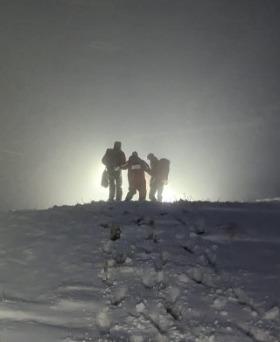
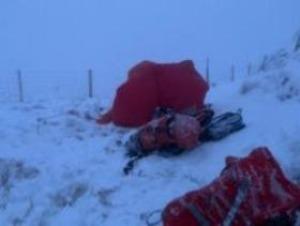
A friend in a winter walking group is struggling to stay warm in cold, windy, wet conditions. You are concerned about their condition. You remember that there is a Swiss Staging System to guide management, but you cannot remember the stages. You wonder if there is a simple or updated version that might help you.
Background
The definitive diagnosis and staging of hypothermia requires the measurement of core temperature, but this is often impossible in the field. The original Swiss Staging System was designed to help rescuers make decisions about the best management of hypothermia by observing clinical findings that correlate with a range of temperatures. However, although this is very helpful, clinical findings vary between individuals even at similar core temperatures. In particular, shivering is not a good predictor of core temperature, although it does give us important information about the person's capacity to generate heat and maintain their temperature. The greatest risk to a cold patient is hypothermic cardiac arrest (HTCA). If we can identify a simple clinical observation that helps us estimate the risk of HTCA, this would help guide our management decisions.
Why this paper is useful
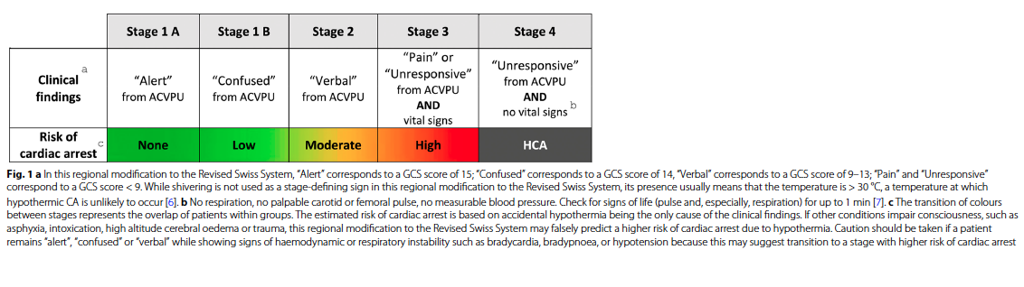
The paper proposed that the level of consciousness and the presence or absence of vital signs can be used to estimate the level of risk of cardiac arrest in primary accidental hypothermia. There is a linear relationship between core temperature and conscious level. This is good news for first aiders and health care professionals because the conscious level can be observed in the field without any equipment. The paper used the AVPU scale to assess the conscious level. In this scheme, a patient who is "A" on the AVPU scale has a low risk of HTCA, "V" moderate risk, "P" with vital signs high risk and "U" without vital signs is in HTCA. This staging allows us to use management guidelines, such as those proposed by ICAR (see below), to optimise patient care.
Context
This is a guideline because HTCA depends on individual variation and comorbidities. The Revised Swiss Staging should only be used if an accurate core temperature is unavailable and there are no acute traumatic, medical or existing comorbidities that alter conscious level. These might falsely predict a high risk of HTCA (e.g., hypoxia, traumatic brain injury, high altitude cerebral oedema).
Subsequently, a paper in 2024 proposed a regional variation to accommodate the ACVPU scale (where "C" = new onset confusion) that is often used in the UK. This is shown below. In the person is "A", there is no risk of HT cardiac arrest and if "C", the risk remains low.
Why not read the papers and decide if you could find this information useful in the field?
Gray D, Pasquier M, Brugger H, Musi M, Paal P. A regional modification to the Revised Swiss System for clinical staging of hypothermia, including confusion. Scandinavian journal of trauma, resuscitation and emergency medicine. 2024 Nov 11;32(1):110. Available at: https://link.springer.com/article/10.1186/s13049-024-01273-3
Paal P, Gordon L, Strapazzon G, et al. Accidental hypothermia-an update: the content of this review is endorsed by the International Commission for Mountain Emergency Medicine (ICAR MEDCOM). Scand J Trauma Resusc Emerg Med 2016;24:111.
Next month we dive into another topic in mountain medicine.
Please comment on this topic or the series in the comments area below.

Comments
Leave a comment.
Submit Comment

 )
) Bronze
 Silver
 Gold
Gold Platinum
 Palladium
 Internal